One-Page vs Multi-Page Websites | Is a Blog Enough for SEO?
See how three website structures serve different customers at a Hong Kong photography studio, and decide which suits your business.
Many Hong Kong small businesses face the same decision when building a website. “My business is simple. Do I need five or six pages? Will customers still find me on Google if I only build one?”
If your web designer suggests adding a blog, you might wonder whether a one-page website with a blog can perform as well in search as a multi-page site.
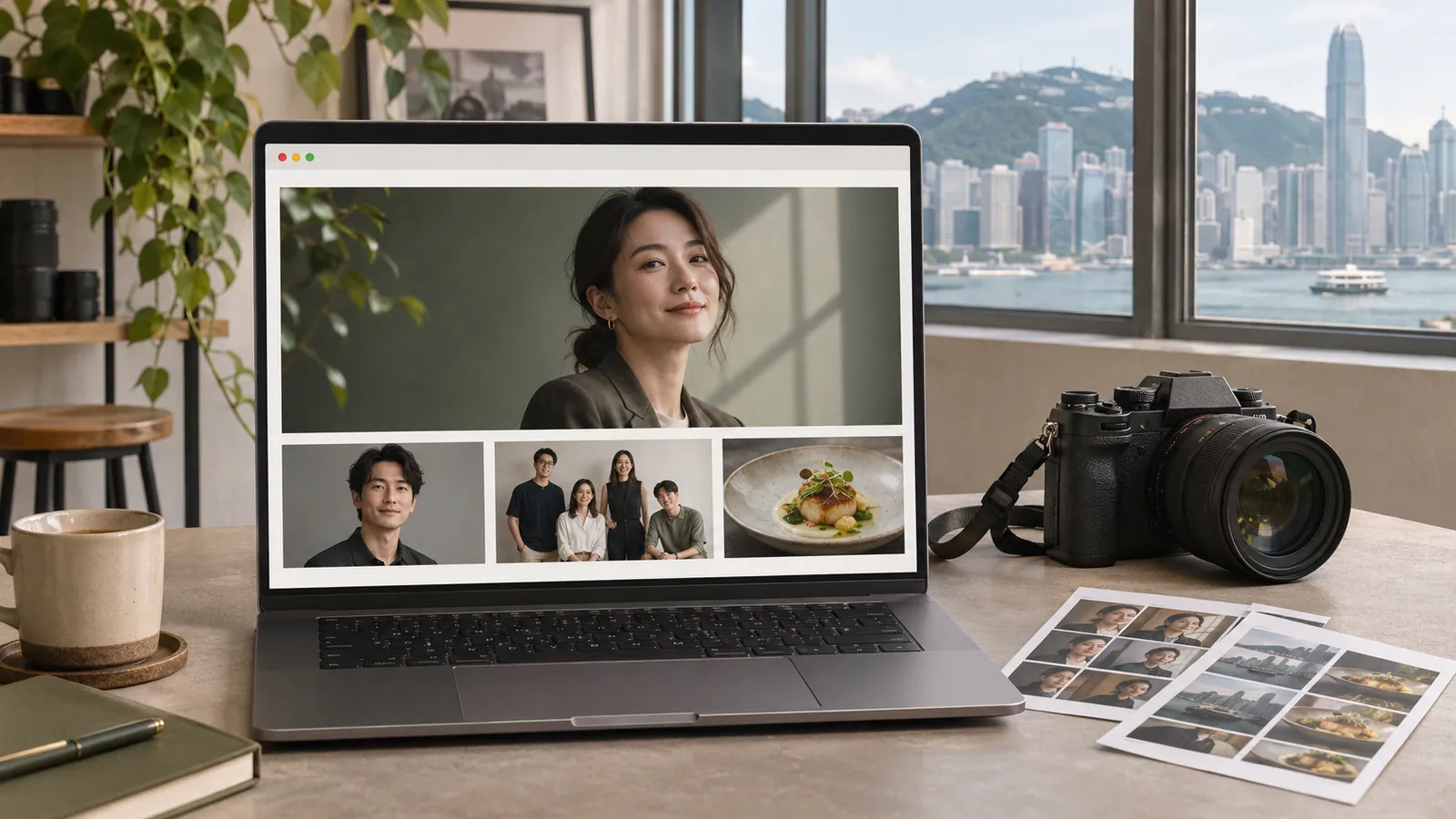
Take a Hong Kong photography studio. Its customers can help us see when to choose a one-page website, a one-page website with a blog or a multi-page website.
1. What do customers need to see before they enquire?
The right structure depends on what customers need to make a decision. Consider two ways the studio might operate.
- One service with a quick decision. Suppose the studio mainly takes ID photos and offers quick portrait sessions. Customers look at a few samples, check the price and location, then enquire on WhatsApp. One page can put the studio introduction, services, portfolio and contact details within easy reach.
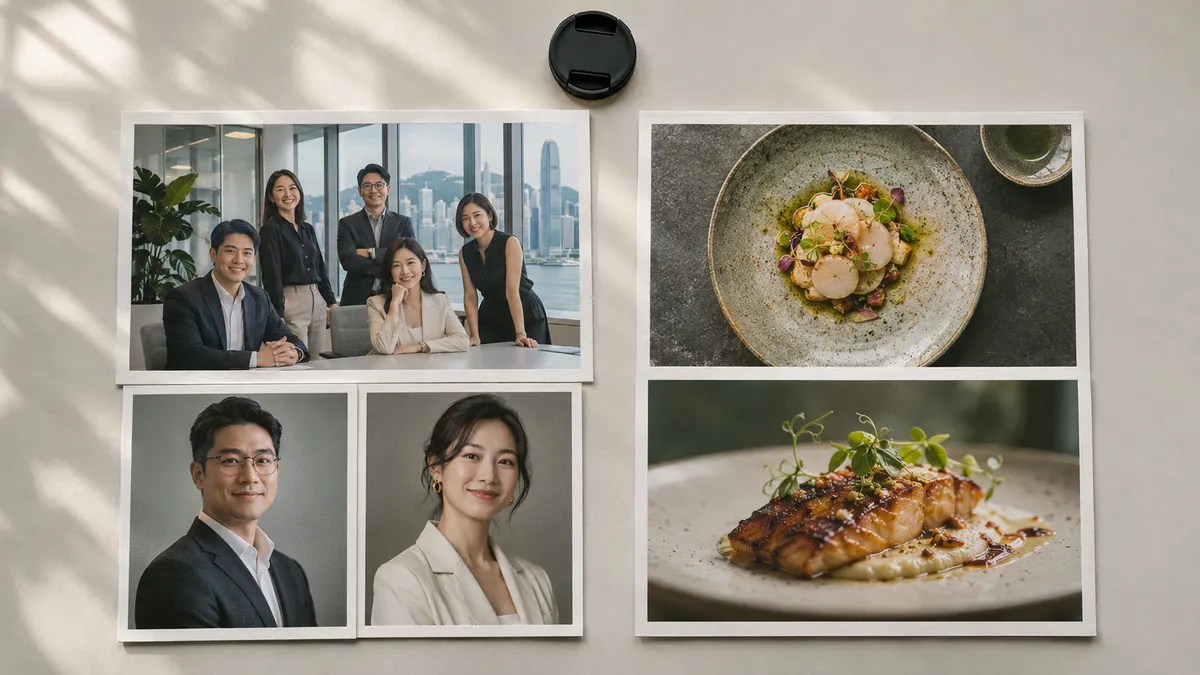
- Several services that need more explanation. If the studio starts offering on-site corporate team photography and restaurant menu photography, customers will have different questions. An office administrator may ask whether the photographer can come to the office and how many people they can shoot in half a day. A restaurant owner may want to see close-ups of the food and know whether the studio charges by session or by dish. A dedicated page for each service can answer those questions in detail.
2. Where do customers enter your website?
Think of the two site structures as different ways to lay out a shop.
- A one-page website works like a gallery. Visitors can scroll from featured work to services, prices and contact details. A navigation link such as
#portfoliojumps to a section on the same page. Google can understand those sections and assess how well the page answers a search. With a single page to work with, it makes sense to focus on your main service and its most relevant search terms. - A multi-page website works like a department store. Each core service has its own page and URL. Someone searching for “on-site corporate team photography Hong Kong” can land directly on the corporate photography page, while a search for “restaurant menu photography” can lead to the food portfolio. Dedicated pages let you address different searches with content written for each audience.
3. Can a blog give a one-page website similar SEO potential?
Yes, depending on how you organise the content. The homepage can introduce the core service and make it easy to enquire on WhatsApp. Each blog post has its own URL and can become another way to find the website if Google indexes it. Nexfusion AI Studio offers a blog add-on so businesses can publish their own case studies and guides through the CMS.
How it works for a photography studio
The homepage shows the studio’s work and explains how to book. The blog can answer a specific question in more depth with an article such as What Colours Should You Wear for Corporate Headshots? A Guide to Dark Suits, White Shirts and Glasses.
- From search to article. A prospective client looking for advice on preparing for a shoot can find the guide through Google.
- From article to enquiry. After seeing the side-by-side photos in the guide, the reader can follow a link to the studio’s services and pricing. The guide can also save the studio from answering the same questions on WhatsApp.
4. What should you check when a web designer offers a blog?
If you’re comparing web design quotes in Hong Kong, ask the supplier to show you how these three things work.
- A dedicated URL for each post. Open a post and check that it has its own address, such as
/blog/article-name. It should be possible to visit or share that address directly. - Editable title tags and meta descriptions. Check whether you can set a title and description for each post in the CMS. Google may use them for the title and snippet shown in search results. Google’s title link guidance · Google’s snippet guidance
- Search performance tracking. Confirm whether you can connect Google Search Console after launch. You can use URL Inspection to check the indexing status of individual posts and the performance report to see which search queries generate impressions and clicks.
5. What belongs on the homepage, in a blog or on a dedicated page?
Use the questions your customers ask to decide where each piece of content belongs.
| Content | Where it fits | Examples |
|---|---|---|
| Core services and quick enquiries | One-page homepage | Studio introduction, selected work, basic prices and a WhatsApp enquiry button |
| Common questions and industry knowledge | Blog posts on either site structure | How to prepare for a shoot, industry tips, case studies and an explanation of how a project was handled |
| Services with distinct customers or more complex requirements | Dedicated service pages on a multi-page website | An established on-site corporate photography service with its own process and pricing |
Before setting a budget, review the past month of WhatsApp enquiries. If most customers ask about the same service, a focused homepage and a few posts on common preparation questions may cover what they need. If your business is expanding into services with different audiences, dedicated pages give each service its own URL and space to explain the details.
Frequently asked questions
Can I add a blog to a Nexfusion one-page website?
Yes. You can add a blog for HK$700. It comes with four human-reviewed AI starter articles. We set up your CMS so you can add and publish your own posts, including the latest news and offers, service guides, answers to common questions and case studies.
Publishing useful posts over time gives you room to cover more search topics and explain them in greater depth. Link from relevant posts to your service information so readers can learn more about your business.